
Decision Drop College Admissions Blog
College Admissions, Decoded
Practical advice on essays, applications, and admissions strategy from two former admissions officers… no jargon, no fear.

Auditions, Portfolios, and Prescreens: How Arts and Music College Applications Work on Their Own Calendar
Students applying to BFA, music, and art programs work on a separate calendar from everyone else. Here is how prescreens, auditions, National Portfolio Day, artist statements, and arts resumes fit into senior fall, and how to keep it all organized.
College Application Mistakes and Admissions Myths: How to Read Your Applicant Portal Without Panicking
A B on the transcript, an empty-looking honors section, a portal that says "missing." Most of what families panic about in October turns out to be fine. We bust the biggest admissions myths, explain the Common App sections nobody talks about, and walk through what to do when your applicant portal scares you.
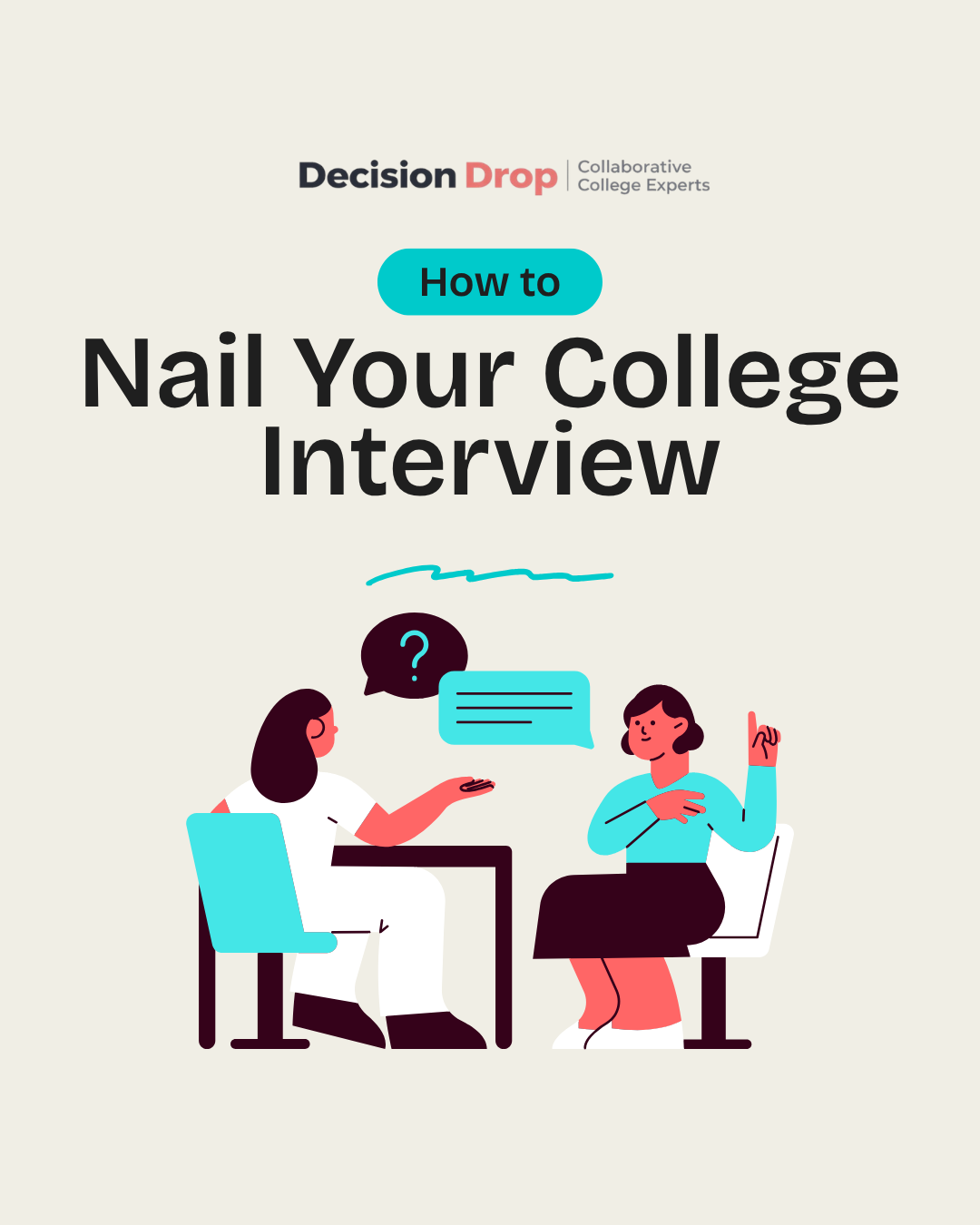
College Interviews: How to Walk In Ready Instead of Terrified
Got a college interview invitation and a knot in your stomach? This guide walks seniors through what happens in an alumni interview, how to prep using your essays and activities resume, what to say when they ask where else you're applying, and how a couple of practice runs can take the fear out of it.

FAFSA, CSS Profile & Financial Aid: What Families Need to Know
Confused about FAFSA, CSS Profile, need-blind admissions, or how much college will actually cost? Here’s what families need to know about financial aid, deadlines, and affordability.
Test Anxiety and Testing Strategy: What Actually Works
Test anxiety is real, and it affects a lot of students during one of the highest-stakes testing seasons of their lives. Here is what the research shows about managing it, how to build a testing timeline that fits the full application season, and how to decide whether submitting scores is the right move for your student.

How Much Should Parents Help With College Applications? Supporting Without Taking Over
Application season pulls parents in, and the instinct to help is understandable. But there is a line between support and takeover, and crossing it creates problems that show up later in the process. Here is how parents can stay genuinely involved without undermining the application their student needs to own.

Choosing Where to Go: How to Compare College Offers and Make the Final Call Before May 1st
Multiple acceptances in hand and May 1st approaching fast. Here is how to compare financial aid offers honestly, evaluate academic and social fit, think through location, and make a final college decision you will feel good about.

Accepted, Denied, Deferred: Making Sense of Your College Admissions Decisions
Decision season is here and the notifications are coming in fast. Whether your student was accepted, denied, deferred, or waitlisted, each outcome requires a different response. Here is a practical guide to what each decision means, what to do next, and how to make a confident choice before May 1st.

After You Submit Your College Applications: What To Do While You Wait for Decisions
Submitting your college applications is not the finish line. Senior fall grades still count, application portals need attention, and colleges may reach out with additional requests. Here is a practical guide to everything students should be doing during the waiting period between submission and decision day.

What an Independent Educational Consultant Does That Your School Counselor Cannot
Most students already have a school counselor. An Independent Educational Consultant does something different. Here is what that looks like in practice during application season, when essays, college lists, testing decisions, and deadlines are all in motion at the same time.

GPA and College Admissions: What Your Grade Point Average Actually Tells Colleges About You
GPA is the most heavily weighted factor in college admissions, but most families misread what it means. Here is what colleges are looking at when they pull up a transcript, and what students at every grade level can do about it.

Extracurricular Activities for College Admissions: Why Depth Beats Breadth
There is a persistent myth in college admissions that more activities means a stronger application. In our experience, the opposite is often true. A packed activity list with nothing real behind it tells an admissions officer very little. What stands out is a student who committed seriously to something, grew within it, and can speak honestly about what it meant to them. This post breaks down what depth actually looks like and why it matters more than volume every time.

Test Optional, Test Blind, Test Required: What Families Need to Know
Test optional, test blind, and test required are not the same thing, and getting them confused can hurt your student's application. This guide explains every college testing policy in plain language, covers what the CLT is and which schools accept it, and helps families decide whether submitting scores is the right move for their student.

What Rising Seniors Should Do in July Before Applications Open
The Common App officially opens for the 2026–2027 application cycle on August 1, and we promise that date will arrive MUCH faster than it seems.
For rising seniors, July is the last real stretch of breathing room before senior year begins, and classes, activities, college visits, and applications all start competing for the same hours. Students who use these next few weeks well do not have to spend every minute working on college applications. They just need to begin.

How to Write a Common App Activities Section That Actually Represents You
Most students pour everything into their college essay and rush through the activity list. But admissions officers spend real time in that section, and how it reads shapes how they see your whole application. Our latest post walks you through exactly how to write an activities section that works in your favor.

Early Decision vs. Early Action: What Every Family Needs to Know Before Applying
Every fall, families face the same question: should we apply early, and if so, how? The answer depends on which early application plan you choose and what each one actually commits you to. Early Decision is binding. Early Action is not. Restrictive Early Action falls somewhere in between. Knowing the difference before November could change everything about how your student's application year unfolds.

How to Write Supplemental Essays That Actually Help Your Application
Supplemental essays can make or break a college application. Learn how to write stronger Why Us, Why Major, and short-answer essays with specific research, authentic voice, and answers that could not fit any other school.

Don’t Sleep on Honors Colleges
Honors colleges can make large public universities feel smaller, more personal, and more academically engaging. Learn what honors programs offer, how applications work, why essays matter, and how honors can affect scholarships and fit.

How to Build a College List That Actually Makes Sense
Build a balanced college list by focusing on fit, affordability, academic goals, campus environment, and realistic admission categories. Learn how many colleges to apply to and why reach, target, and likely schools all matter.

Applying to Art School: Portfolios, Essays, and Finding the Right Fit
Applying to art school requires more than talent. Learn how students can build a strong portfolio, write authentic art school essays, research creative programs, meet deadlines, and find the right-fit art or design college.